Common causes of low water pressure in Oxford homes
Low water pressure in Oxford homes usually comes down to a handful of culprits: clogged fixtures, a failing pressure regulator, corroded pipes, or a municipal supply issue. Here's how to tell which one you're dealing with.
Low water pressure in Oxford homes almost always traces back to one of six things: a clogged aerator or showerhead, a failing pressure regulator, corroded galvanized pipes, a hidden leak, a partially closed shutoff valve, or a municipal supply issue. The fix ranges from a five-minute aerator cleaning to a full repipe, depending on which one you're facing.
We run into this constantly across Oxford and the surrounding areas, and the good news is that most pressure problems are diagnosable in under an hour. Below, we walk through each cause, how to tell them apart, and what it actually takes to fix them.
What causes low water pressure in Oxford Alabama?
Common causes of low water pressure in Oxford homes include clogged fixture aerators, a worn-out pressure-reducing valve, corroded galvanized steel supply lines, hidden water leaks, and municipal supply fluctuations. The right fix depends entirely on whether the problem affects one fixture or the whole house.
That distinction - one fixture versus the whole house - is the single most useful diagnostic step you can take. If only the kitchen sink is weak, you're looking at a fixture-level problem. If every tap in the house dribbles, the issue is upstream: the main line, the pressure regulator, or the supply itself.
Oxford's housing stock spans everything from mid-century homes near downtown to newer builds off Highway 78, and each era brings its own pressure quirks. Homes built before 1970 often still have galvanized steel piping that's narrowed to a pencil's width inside. Newer construction tends to have copper or PEX, which rarely corrodes but can still suffer from regulator failure or debris in the lines after road work.
Start with the easy stuff: aerators, shutoff valves, and supply lines
Before you call anyone, check the aerator on the affected faucet. Unscrew it - most hand-tighten - and look at the screen. If it's caked with white mineral scale or black gunk, that's your problem. Soak it in white vinegar for 30 minutes, scrub it with an old toothbrush, and screw it back on. You'll often regain full pressure immediately.
Showerheads are the same story. A showerhead that's been in place for three or four years can lose 40% of its flow to scale buildup. Soaking it in vinegar overnight usually restores it.
Next, check the shutoff valve under the sink. If someone bumped it while loading groceries or cleaning, it might be partially closed. Turn it fully counterclockwise and test again. This sounds obvious, but we've charged zero dollars to fix this exact issue more times than we can count.
If the aerator is clean and the valve is open, look at the supply line. Braided stainless lines can kink or develop internal blockages over time. A $12 replacement line from any hardware store solves it. If you'd rather not crawl under the cabinet, our faucet repair in Eastaboga, Alabama service covers this exact diagnosis, and we carry replacement lines on every truck.
Pressure regulator failure: the most common whole-house culprit
A pressure-reducing valve - also called a pressure regulator - sits on your main water line where it enters the house. Its job is to knock incoming municipal pressure down to a safe 50-60 PSI. When it fails, it usually fails in one of two ways: it sticks closed and starves the whole house, or it sticks open and sends 100+ PSI through your pipes, which is how you get burst supply lines and failed water heater connections.
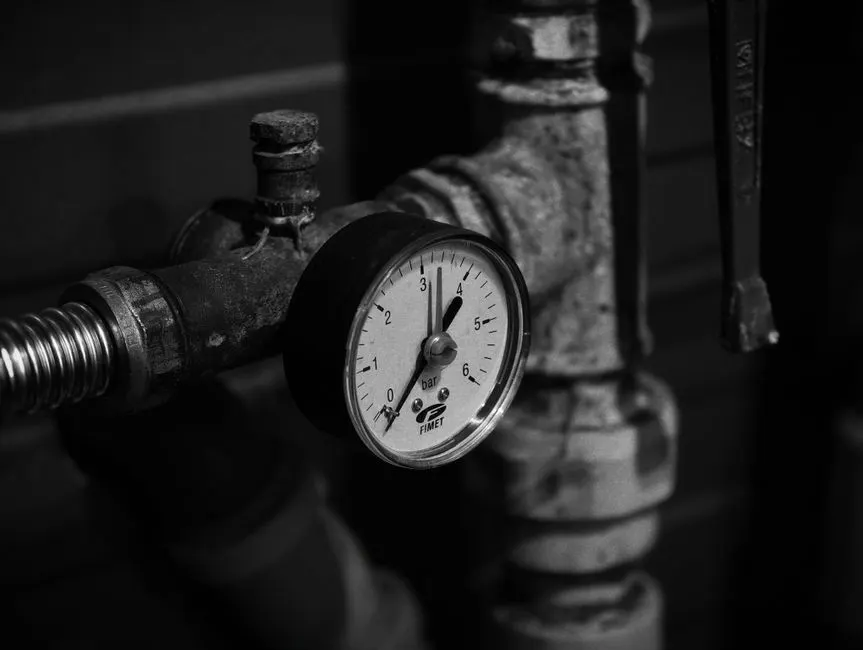
Here's how to test it. Buy a $10 pressure gauge that screws onto a hose bib. Attach it to the spigot closest to your main shutoff, open the valve fully, and read the static pressure. Anything below 40 PSI or above 80 PSI means the regulator needs attention. Normal residential pressure in Oxford runs 50-60 PSI.
Regulators last 10-15 years on average. If yours is original to a house built in the 1990s or early 2000s, it's on borrowed time. Replacement typically runs $250-$450 in 2026 pricing, including the part and labor. It's a one-visit job - we shut off the main, swap the valve, and restore pressure the same day.
One thing to know: if your regulator failed open and you've had high pressure for a while, check your water heater's T&P valve and your washing machine hoses. Those are the first things to go.
Corroded galvanized pipes in older Oxford neighborhoods
Galvanized steel pipes were standard in American homes from the 1930s through the 1960s. They rust from the inside out. By the time a galvanized line is 50 years old, its interior diameter can be reduced by 60-80%, which strangles flow to every fixture downstream.
You can often spot galvanized pipe by tapping it with a screwdriver. It sounds dull and heavy compared to the ring of copper. Look at the joints too - galvanized fittings are threaded and bulky, while copper joints are soldered and smooth.
If your Oxford home was built before 1965 and still has original plumbing, there's a good chance galvanized is the root cause of your pressure problems. The fix isn't a patch - it's replacement. A partial repipe of the worst-affected runs might cost $1,800-$3,500. A full-house repipe with PEX typically runs $4,500-$8,000 depending on square footage and fixture count.
We handle this regularly in older Eastaboga and Oxford homes, and the difference after a repipe is dramatic. Homeowners who've lived with trickling showers for years suddenly have normal pressure at every tap. If you're weighing repair versus replacement, our plumbing pipe repair in Eastaboga, Alabama team can assess your lines and give you a straight answer on which makes sense.
Hidden leaks stealing your pressure
A leak on your main service line or under your slab bleeds pressure before water ever reaches your fixtures. You might not see standing water - many slab leaks stay hidden for months, slowly saturating the ground underneath your foundation.
Here's a simple test. Shut off every fixture in the house, including the ice maker and any outdoor spigots. Then go watch your water meter. If the low-flow indicator - usually a small triangle or star - is still spinning, you have a leak somewhere.
Other signs of a hidden leak include:
- A water bill that jumped 20% or more with no change in usage
- Warm spots on the floor (hot-side slab leak)
- The sound of running water when everything is off
- Mildew smell in a closet or under a cabinet
- Cracks appearing in tile or drywall near a plumbing wall
Finding these leaks without tearing up your floors takes specialized equipment - acoustic listening devices, thermal imaging, and pressure isolation testing. Our plumbing leak detection in Eastaboga, Alabama service pinpoints the leak location before we cut anything, which saves you thousands in unnecessary demolition.
Municipal supply issues and seasonal demand
Sometimes the problem isn't in your house at all. Oxford draws its water from a municipal system that also serves parts of Anniston, and pressure can dip during peak demand periods - early mornings when everyone's showering, or summer evenings when irrigation systems kick on.
If your pressure is fine at 2 PM but weak at 7 AM, that's a supply-side pattern, not a plumbing defect. Call the water department and ask if they're aware of pressure issues in your area. If neighbors are experiencing the same thing, it's almost certainly municipal.
Seasonal shifts matter too. In north Alabama, summer demand from lawn irrigation can drop neighborhood pressure by 10-15 PSI during peak hours. Winter brings its own issues - if you've ever had a line partially freeze, you know the pressure comes back slowly as it thaws.
We work across the region and see the same patterns in Plumbing in Oxford that we do in Eastaboga, Anniston, and the surrounding communities. If your neighbors have normal pressure and you don't, the problem is on your side of the meter.
What to watch out for when diagnosing low water pressure
Homeowners make a few predictable mistakes when chasing pressure problems. Avoiding them saves time and money.
- Replacing fixtures before diagnosing the cause. A new showerhead won't fix low pressure caused by a failing regulator. Diagnose first, buy second.
- Turning up the regulator without checking the rest of the system. If you crank pressure to 80 PSI to compensate for corroded pipes, you're setting yourself up for a burst line. Fix the restriction, don't mask it.
- Ignoring the water heater. Sediment buildup in a tank water heater can restrict hot-water flow specifically. If only your hot side is weak, that's the likely culprit.
- Assuming it's the city's fault. Municipal issues are real, but they're the least common cause. Check your side of the meter first.
- Using chemical drain cleaners on pressure problems. They don't address pressure at all, and they can damage older pipes. If you have a genuine clog, our drain cleaning in Eastaboga, Alabama service clears it safely.
When to call a professional
If you've cleaned the aerators, confirmed the shutoff valves are open, and tested your static pressure with a gauge, and you're still seeing low pressure, it's time to bring in someone with the right tools. The remaining causes - regulator failure, corroded pipes, hidden leaks, and main line issues - all require diagnostic equipment and, in most cases, a permit to repair.
At Mamas Plumbing Solutions, we start every pressure call with a full-system assessment: static pressure at the main, flow rate at multiple fixtures, and a visual inspection of accessible piping. We tell you what we find, what it costs to fix, and whether it's something you can safely handle yourself. No guesswork, no upsell.
We serve homeowners across Oxford, Eastaboga, and the surrounding Calhoun County communities. If you've been living with weak showers and slow-filling sinks, we can usually diagnose the cause in a single visit.
Frequently Asked Questions
What causes low water pressure in Oxford Alabama?
The most common causes are clogged aerators, a failing pressure regulator, corroded galvanized pipes, hidden leaks, and municipal supply fluctuations. In Oxford specifically, older homes with original galvanized plumbing account for a large share of whole-house pressure complaints. A pressure gauge test at your hose bib will tell you whether the issue is inside your home or on the supply side.
How can I increase water pressure in my Oxford home?
Start by cleaning aerators and showerheads, then test static pressure with a $10 gauge. If it reads below 40 PSI, the pressure regulator likely needs replacement - a $250-$450 fix. If pressure is normal but flow is weak, you're dealing with a restriction in the pipes or a fixture-level clog. A licensed plumber can pinpoint the cause in under an hour.
Should I call a plumber for low water pressure in Oxford?
Call a plumber if cleaning aerators and checking shutoff valves doesn't restore pressure, if your gauge reads below 40 or above 80 PSI, or if you suspect a hidden leak. These situations require diagnostic tools and, in the case of regulator or pipe replacement, a permit. Most pressure issues are resolved in a single visit.
Can a clogged pipe cause low water pressure in Oxford AL?
Yes. Scale, rust, and sediment buildup inside pipes restrict flow the same way cholesterol restricts blood flow. Galvanized steel pipes are the worst offenders - a 50-year-old line can lose 60-80% of its interior diameter. If only one fixture is affected, the clog is local. If the whole house is weak, the main line or a major branch is restricted.
How much does it cost to fix low water pressure in Oxford Alabama?
Typical 2026 costs range from $0 (cleaning an aerator yourself) to $450 for a pressure regulator replacement, $1,800-$3,500 for a partial repipe, and $4,500-$8,000 for a full-house repipe. Leak detection and repair runs $300-$800 depending on access. We give you a flat quote before any work begins.
Get help with Plumbing in Eastaboga
If low water pressure is making your Oxford home feel like it's running on fumes, we can help. Our team diagnoses the cause, explains your options, and fixes it right the first time.
Call Mamas Plumbing Solutions at (205) 708-6253 to schedule a pressure assessment. We serve Eastaboga, Oxford, Anniston, and the surrounding communities, and we'll tell you exactly what's wrong before we touch a wrench.