Focused arrival windows
Useful updates and clear arrival timing.
When your tankless unit quits mid-shower, you need tankless water heater repair in Eastaboga, Alabama that actually solves the problem. We diagnose the error code, test the gas valve and flow sensor, and get hot water running again, often within hours. One call, one visit, no guesswork.
Useful updates and clear arrival timing.
Review the approach and price before deciding.
Equipped vehicles and respectful cleanup.
Neighbors serving neighbors with follow-through.
Every repair visit includes the full diagnostic and the fix. Here is what is covered in a standard service call versus what is quoted separately if we find it.
We read stored error codes from the control board, test inlet and outlet temperatures, check flow rate at the unit, and verify gas pressure at the manifold. This tells us exactly what failed, not what might have failed.
We flush the heat exchanger with a descaling pump and food-grade solution. This removes mineral scale that restricts flow and causes the unit to cycle or shut down. Included in every repair where scale is a factor.
Flow sensors, igniters, gas valves, control boards, and inlet filters are common replacements. We carry Rheem and Navien parts on the truck, so most replacements happen on the first visit without a return trip.
After the repair, we test for gas leaks with a combustible gas detector and confirm the venting pulls correctly. This is required by code and it is how we make sure the unit is safe to run before we leave.
We run hot water at every fixture in the house to confirm the unit fires and holds temperature under real demand. If a fixture has low flow or a crossed line, we find it during this test, not after we leave.
Share what is happening and receive a clear next step from the local team.
Tankless water heater repair in Eastaboga, Alabama means finding out why your unit stopped producing hot water and fixing that specific failure, not swapping parts and hoping. We test the inlet water temperature, check the flow sensor, inspect the heat exchanger for scale, verify gas pressure at the manifold, and read the error codes stored in the control board. Rheem and Navien units throw different codes, and we carry the diagnostic tools to read both.
Most Eastaboga homes with tankless systems sit on well water or hard municipal supply, and both leave mineral scale inside the heat exchanger. That scale cuts flow, trips the unit offline, and shows up as lukewarm water or a flashing error light. If you have been searching for a tankless water heater repair near me Eastaboga Alabama and getting voicemail, we answer the phone and schedule a real window.
You call (205) 708-6253 or book online. We ask for the unit brand, the error code if you can see it, and whether you have any hot water at all. That tells us what parts to load. Most Eastaboga calls get a same-day or next-morning window.
The tech arrives, shuts off gas and water, and runs a full diagnostic. We check inlet and outlet temperatures with a pressure gauge, test the flow sensor, inspect the heat exchanger for scale, and read the control board codes. You get a written diagnosis and a flat price before we touch a wrench.
Once you approve the price, we do the work. A flow sensor or igniter swap runs 45 to 90 minutes. A heat exchanger descale takes about two hours. If we find a cracked exchanger or a failed gas valve, we tell you and quote the replacement before proceeding.
We fire the unit, run hot water at every fixture in the house, and confirm the outlet temperature holds steady at your setpoint. We check for gas leaks with a combustible gas detector and verify venting is pulling correctly. Nothing gets signed off until the unit runs clean.
Before we leave, we show you what failed, what we replaced, and how to keep it from happening again. Parts carry a manufacturer warranty and our labor is warrantied for 90 days. You get the invoice and warranty info by email the same day.
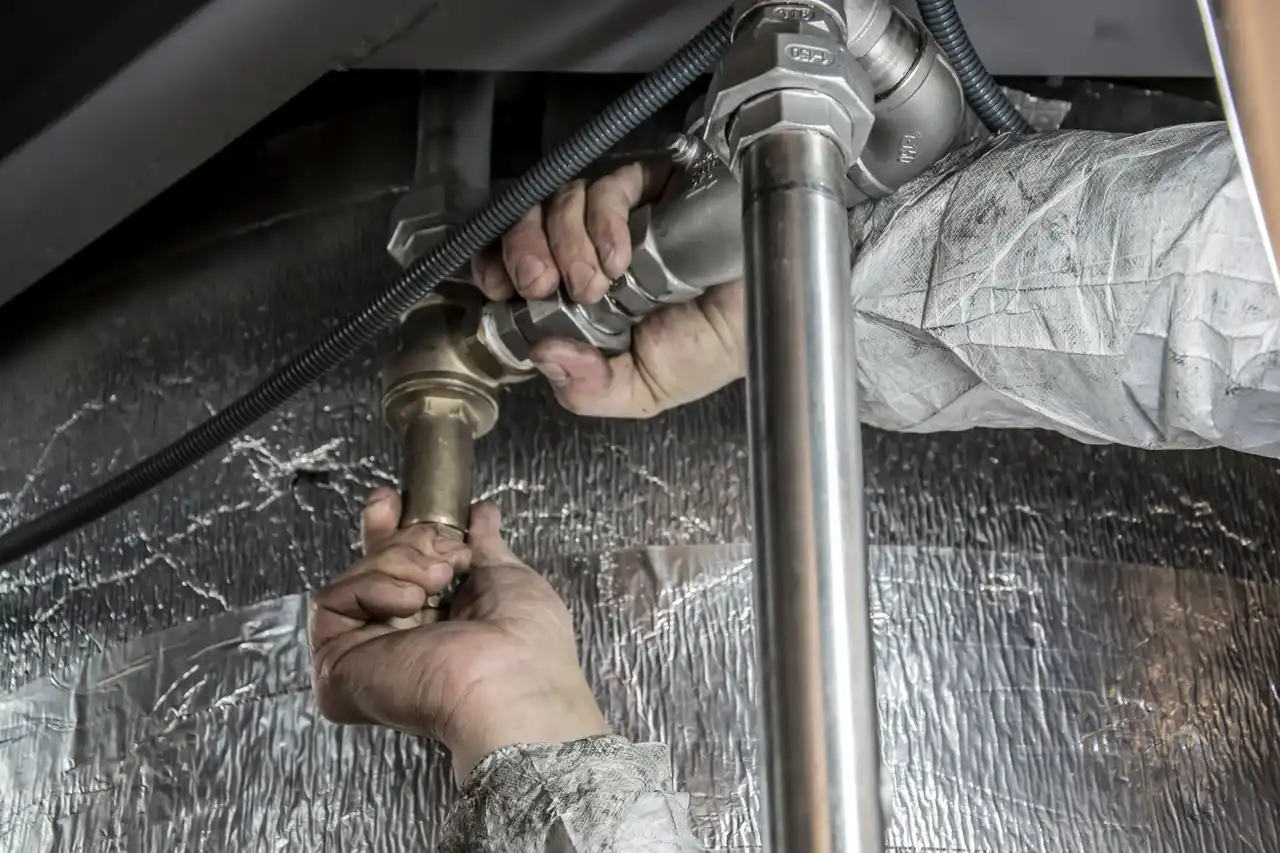
Used to test gas pressure at the manifold and verify flow rate through the unit. Accurate readings tell us whether the problem is supply-side or inside the unit.
Inspection camera for looking inside the heat exchanger and venting without disassembling the whole unit. Finds scale, debris, and blockages fast.
Circulates food-grade descaling solution through the heat exchanger to dissolve mineral scale. Restores flow rate and heat output without replacing parts.
Sniffs for gas leaks at every connection after a repair. Required before we sign off on any gas-fired appliance work.
Checks inlet water pressure and gas pressure. Low pressure on either side causes ignition failures and error codes that look like part failures.
Standard tools for replacing fittings, valves, and supply lines. We carry copper, PEX, and PVC fittings to match what is already in your home.
We read the stored error codes before touching anything. The code tells us which system failed, and we test that system first. This cuts diagnostic time in half and avoids replacing parts that are still good.
We isolate the heat exchanger, circulate descaling solution for 45 to 60 minutes, flush with clean water, and verify flow rate. This is the single most effective maintenance step for tankless units on hard water.
We test static and dynamic gas pressure at the manifold. Tankless units need a specific pressure range to fire reliably. If pressure is low, we trace the line back to find the restriction or sizing issue.
After any repair, we verify venting, clearances, and gas connections meet Uniform Plumbing Code requirements. This protects you at inspection and keeps your insurance valid.
Call us at (205) 708-6253 and read us the code. We look it up, tell you what it usually means, and schedule a same-day or next-morning visit. Most code-related failures are a single part replacement. Hot water back on within hours, usually the same day.
That pattern points to scale in the heat exchanger. We flush the unit, restore flow, and test outlet temperature. If the exchanger is too far gone, we quote a replacement before doing anything else. Water temperature back to your setpoint, and the unit stops short-cycling.
We diagnose the issue, repair it, and provide documentation of the repair for your real estate agent. If the unit needs replacement, we quote that too so you can decide before closing. A clean inspection report and a working unit for the buyer.
Surges fry control boards. We test the board, replace it if needed with an OEM part, and verify the unit runs through a full heating cycle. We also check the gas valve and sensors for collateral damage. Unit back online and running, with the failed board replaced under warranty if applicable.
Eastaboga sits in a part of Alabama where water hardness runs high, and that single fact drives most of the tankless failures we see. Mineral scale builds inside heat exchangers faster here than in softer-water areas, which means a unit that would last five years between flushes somewhere else needs attention every two to three years here. Most homes in the area are on well water or a municipal supply with elevated calcium, and both leave deposits. We also see older homes with undersized gas lines that were never upgraded when a tankless unit was installed. That causes ignition failures and error codes that look like part failures but are really a supply problem. If you need a tankless water heater fix Eastaboga AL and want it done once, call us and describe what the unit is doing. We will tell you what it likely is before we even arrive.
Mix of older homes and newer builds. Older homes often have gas lines sized for tank units, which causes ignition problems on tankless.
Well water is common here, and the hardness runs high. Heat exchanger descaling is a regular part of tankless service in this area.
Rural properties with private wells. Sediment filters and inlet screens clog faster, so we check them on every repair visit.
Close to the river, and groundwater levels affect sump pumps and water lines. We often check both on a tankless call.
Scale builds inside the heat exchanger and restricts flow. Units short-cycle, run lukewarm, or shut down entirely. Annual or biennial descaling prevents most of these failures.
Tankless units need higher gas volume than tank units. Undersized lines cause ignition failures and error codes. We test pressure and resize the line if needed.
Tankless units with exposed piping can freeze and crack. We check freeze protection settings and insulate exposed lines during cold-weather service calls.
Lightning and grid surges fry control boards. We test boards after storms and replace them with OEM parts when they fail.
A Navien NPE-240A in Eastaboga shut down with an E003 error code. The homeowner had no hot water for two days. Flow rate at the unit was 1.8 gallons per minute, well below the 3.5 GPM the unit needed to fire.
We descaled the heat exchanger with a pump and solution, replaced the inlet filter, and restored flow to 3.9 GPM. The unit fired on the first try and held 120 degrees at every fixture. Total time on site was two hours.
Maintenance: We recommended descaling every 18 months given the water hardness in this area. The homeowner now books a maintenance flush each fall.
A Rheem RTGH-95DVLN in Oxford would not fire. The homeowner had called another company that quoted a full unit replacement at $2,800. The unit was only six years old.
We found a failed igniter and a dirty air intake. Replaced the igniter, cleaned the intake, and tested gas pressure. The unit fired and ran through a full cycle. Total repair cost was $340, and the unit is still running today.
Maintenance: We showed the homeowner how to check the intake screen monthly and clear any debris. That simple step prevents most ignition failures.
A Bradford White tankless unit in Anniston kept throwing ignition codes. The unit was new, but the gas line was half-inch pipe run 40 feet from the meter, which was not enough volume for the unit's demand.
We replaced the half-inch run with three-quarter-inch copper pipe and verified pressure at the manifold. The unit fired reliably and held temperature through simultaneous showers and laundry. The repair took four hours.
Maintenance: We tagged the gas line with the correct sizing for future reference and recommended an annual pressure check to catch any drop before it causes problems.
These are the failures we see most often on Eastaboga tankless units. If yours is doing any of these, call us before it gets worse.
Scale buildup in the heat exchanger restricts flow and prevents the burner from reaching full output. Left alone, the exchanger can crack and the repair cost triples. We descale the heat exchanger with a pump and solution, restore flow rate, and test outlet temperature at every fixture. Most units return to full temperature the same visit.
A failed flow sensor, dirty intake, or low gas pressure stops ignition entirely. You are without hot water until it is fixed, and the error code may not point to the real cause. We test the flow sensor, clean the intake, and check gas pressure at the manifold. Once we find the failure, we replace the part and verify ignition before we leave.
Intermittent shutdowns usually mean a failing control board or a venting issue. The unit works sometimes and not others, which makes it hard to diagnose without the right tools. We read the stored codes, test the board under load, and verify venting. If the board is failing, we replace it with an OEM part and confirm the unit runs through a full cycle without shutting down.
Leaks corrode fittings, short electronics, and damage the wall or floor around the unit. A small drip becomes a big repair if it is ignored. We locate the leak, repair or replace the fitting or valve, dry the area, and test the unit under pressure. If water reached the control board, we inspect it and replace it if needed.
$180 - $650 depending on parts and scope
We quote flat prices, not hourly rates. Typical 2026 pricing for tankless water heater repair in Eastaboga, Alabama runs $180 to $650 depending on the part and the labor involved. The diagnostic fee is $89 and is waived when you approve the repair. We tell you the price before we start, and it does not change unless we find something different than what we diagnosed. No surprise line items, no padded hours.
A repair that costs $400 now can add five to ten years to a unit that would otherwise be replaced at $2,500 or more. We tell you when a repair makes sense and when it does not. That honesty is why people call us back.
A flow sensor or igniter runs $80 to $180 in parts. A gas valve or control board runs $250 to $450. We use OEM parts, not aftermarket, because they last longer and keep your warranty intact.
A sensor swap takes 45 to 90 minutes. A control board or gas valve takes two to three hours. We quote the labor upfront based on the diagnosis, not on how long it actually takes.
Light scale flushes in 45 minutes. Heavy scale that has hardened inside the exchanger can take two hours or more. If the exchanger is too far gone, we tell you and quote a replacement instead.
A unit in an open garage or utility room is easy to work on. A unit tucked in a tight closet or attic adds labor time. We assess access during diagnosis and factor it into the quote.
If the gas line is undersized or needs a new run, that is quoted separately. Most gas line repairs run $300 to $800 depending on length and materials. We test pressure first to confirm it is needed.
Our techs work on tankless systems every week, not once a quarter. That matters because tankless units fail differently than tank-style heaters, and the diagnostic path is different too. We have flushed heat exchangers on well water, replaced control boards fried by power surges, and traced intermittent failures that only showed up when two fixtures ran at once. We carry Rheem, Navien, and Bradford White parts on the truck, plus the RIDGID and Milwaukee diagnostic tools to test gas pressure and flow. When we say we can fix it, we mean we have fixed that exact failure before.
Our Navien quit on a Saturday morning with three kids needing showers. Called at 8, tech was here by 10:30. Turned out to be a flow sensor and a scaled-up heat exchanger. He flushed it, swapped the sensor, and we had hot water by lunch. Price was exactly what he quoted. No games.
Had another company tell me I needed a whole new unit. Got a second opinion from Mamas. They found a failed igniter and a dirty intake, fixed both for under $400. That was two years ago and the unit is still running. Saved me thousands.
I manage several rentals with tankless units. Mamas is the only shop I call now. They show up when they say, they explain the repair in plain language, and they do not pad the bill. Had a gas valve go out on a Rheem last month and they had it fixed same day.
Most repairs run $180 to $650 in 2026, depending on the part. A flow sensor or igniter replacement sits at the low end. A gas valve or control board swap runs $400 to $650. Heat exchanger descaling is usually $200 to $350. We quote the exact price after diagnosis, before any work starts.
The three most common causes we find are scale buildup in the heat exchanger from hard water, a failed flow sensor that never tells the unit to fire, and a dirty or clogged air intake. Error codes on the display point to which one. A unit that runs lukewarm usually means scale; one that never fires usually means the flow sensor or gas supply.
You can flush the unit yourself with a descaling kit if you are comfortable with basic plumbing. Anything involving the gas valve, burner assembly, or control board needs a licensed tech and a Gas Fitter Certification. Working on a gas appliance without that credential voids the warranty and creates a real carbon monoxide risk.
A flow sensor or igniter swap takes 45 to 90 minutes. A control board or gas valve replacement runs two to three hours. A full heat exchanger descale is about two hours. We schedule a two-hour window and tell you upfront if the job will run longer than that.
Not seeing your question? Our local team can help you understand urgency, scheduling and what to expect.
Ask the local team
A tankless unit that shuts down often sends homeowners to the drain snake when the real issue is scale. We clean drains with a hydro jetter and camera, and we can check your water heater on the same visit to Eastaboga.
View service
A dripping faucet wastes the hot water your tankless unit just paid to heat. We rebuild faucets with Moen and Delta cartridges, and we test flow at every fixture after a tankless repair to confirm pressure is where it should be.
View service
New faucets change flow rates, and tankless units are flow-sensitive. After installing a Kohler or American Standard faucet, we verify the unit still fires correctly at low flow so you do not get cold surprises at the sink.
View serviceA hidden slab leak or pinhole in a copper line can starve a tankless unit of inlet pressure and trip it offline. We use leak detection equipment to find the source before you spend money on a repair that will not solve the problem.
View service
Call us at (205) 708-6253 or send an email to info@mamasplumbingsolutions.com. We answer the phone during business hours and return messages after hours for emergencies. If you've got a leak, a clog or no hot water, don't wait. Reach out and we'll get you on the schedule.